
What is an AI harness
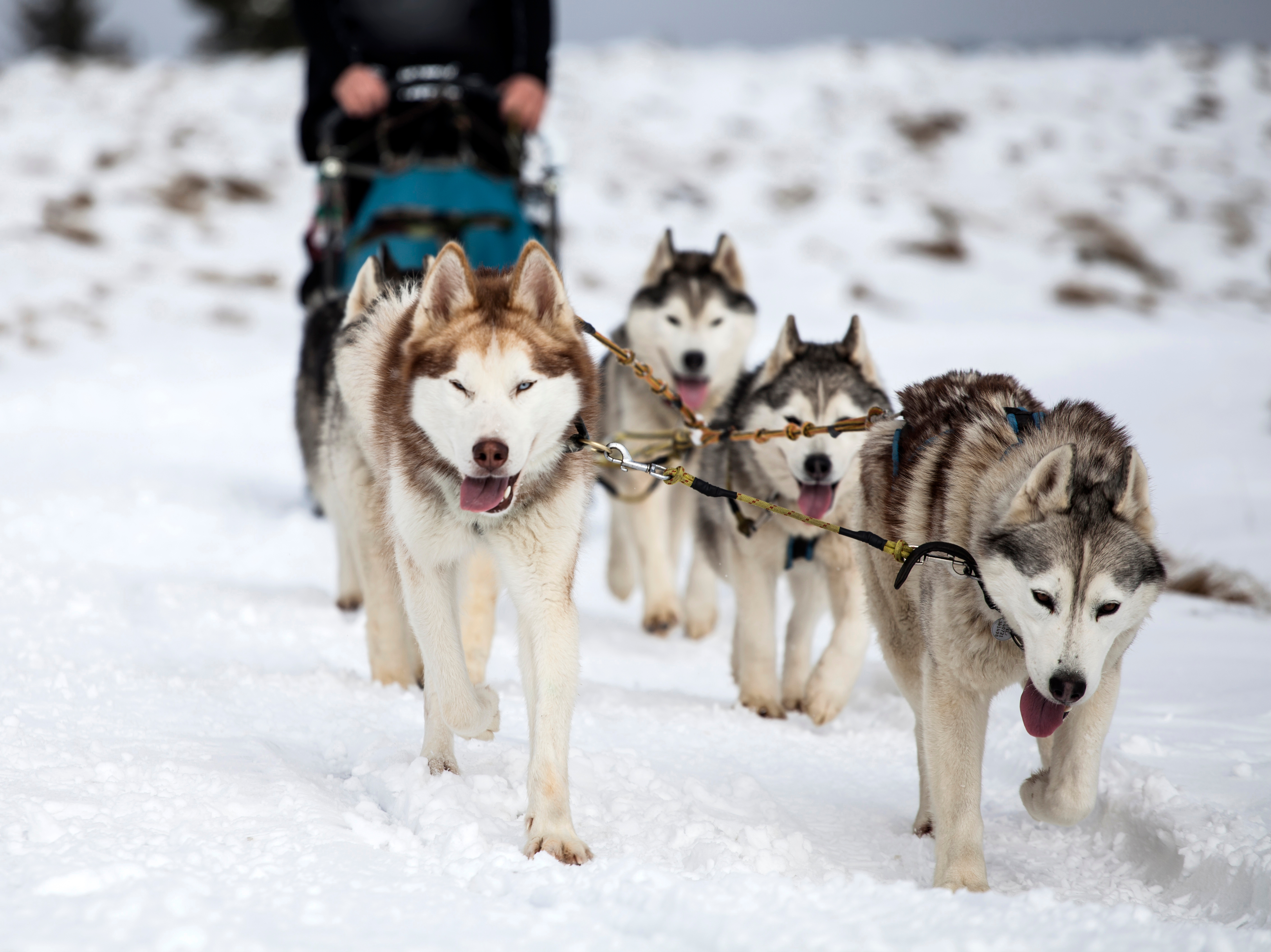
A team of Siberian Huskies at the start of a trail is a genuinely impressive thing. Each dog is powerful, fast, and completely willing to run. The problem is that willingness, untethered, is not the same as usefulness. Release the team without a harness and what you get is not a sled moving forward. What you get is six hundred pounds of enthusiasm moving in six different directions at once.
The harness is what changes the equation. It is the physical system that takes all of that energy and transmits it in a single direction. It keeps the lines from tangling. It connects each dog to the sled in a way that makes the musher's input meaningful. The dogs are not diminished by it. They are made useful by it.
Most B2B marketing teams have adopted AI with roughly the same energy those huskies bring to a starting line. The capability is real. The willingness to run is obvious. What most of them have not built is the harness.
What the harness actually does
The harness in an AI marketing context is the structured layer between the model and the live operation. It is not the prompt. It is not the model you selected or the platform you licensed. It is the set of decisions your team has made about what the AI is allowed to do, on what data, under what review conditions, and with what record of what happened.
Without the harness, the AI's output travels directly into the operation the same way an uncoupled dog team's energy travels directly into chaos. There is plenty of output. It goes in several directions. Some of it is productive. None of it is under meaningful control.
The harness defines the direction of travel. It keeps the lines from crossing. It gives the marketer something real to hold. The musher does not generate the speed. The dogs do. But the musher is the one who knows where the destination is, and the harness is what makes the musher's judgment matter.
What happens without it
The consequences of running AI without a harness are not dramatic. They accumulate. That is what makes them expensive.
AI that can generate content without a review step produces brand drift at scale. The first ten pieces look close enough to voice. By piece forty, the tone has shifted in a direction nobody chose. The drift is gradual, which means nobody flags it at the moment it happens. By the time someone notices, the archive contains work that does not sound like the company, and the audience has already formed an updated impression.
AI that can write to CRM fields or modify segment definitions without a defined review step is applying power without traction. Fields get populated by inference rather than ground truth. Segments drift from their stated definitions. The damage is invisible until a sales manager notices that the enterprise segment contains contacts nobody would call enterprise, or until a rep calls a churned customer a hot prospect.
AI that can trigger sends, update records, or modify workflows without an audit trail creates a problem that surfaces at the worst possible moment. The quarterly review. The compliance question. The deliverability investigation. Someone asks what changed in the last ninety days, and the honest answer is: we do not know exactly, the AI touched several things and we did not keep a record.
The pattern we see repeatedly in practice is this. A team runs AI without a harness for six months. The problems accumulate quietly. Then they surface all at once, and the cleanup takes longer than the time the AI was supposed to save.
What goes into a harness
A harness does not need to be complicated. It needs to be written down and followed.
The first component is scope boundaries. A written statement of what the AI is and is not authorized to do in your specific operation. Not a vague policy like "use AI for content." Something specific: AI drafts, a human approves before publication, AI does not touch contact records or segment definitions without a submitted request. The boundary does not have to be restrictive. It has to be explicit. Implicit rules are not rules. They are suggestions that erode under deadline pressure.
The second component is review gates. The points in the workflow where a human looks at AI output before it reaches the live operation. These are not formalities. They are the mechanism by which the marketer remains the musher and does not become a passenger. Most of them do not take long. Many are thirty-second checks. But they have to be genuine checks. A rubber stamp is not a gate.
The third component is an audit trail. A record of what the AI produced, when it was produced, and what happened to it. Not for compliance theater. Because six months from now, when something is wrong and someone asks what changed, the investigation needs a starting point. If the starting point is "we do not know what the AI touched," the investigation is already in trouble.
A well-harnessed dog team is not a slower team. It is a faster one, because the energy goes somewhere. The musher is not doing less work. They are directing more of it. The harness did not diminish the dogs. It made them useful at scale, on terrain, in conditions that would otherwise scatter them.
The same is true of AI in a marketing operation. The teams that will be running strong programs in two years are not the teams that adopted the most AI the fastest. They are the teams that built the structure that made the adoption durable. The dogs are already at the starting line. Build the harness.
Put the method on paper: the Tactical Marketing Workbook.
The full methodology converted into working sessions - eight phases of fill-in worksheets, exit checklists, and one-week action steps. Print it, work one vertical at a time, and turn the framework into decisions your team has actually made.
Philip Easley-Bosley is the founder of Tactical Marketing and a thirty-year expert marketing consultant. His path to founding the firm ran through sales and marketing leadership, years inside Act-On Software consulting with thousands of clients as Lead Marketing Automation Strategist, and a consistent priority on training and team building that a linear career could not have produced. He sets strategy, owns the architectural calls on every engagement, and writes about marketing operations, automation, and the discipline of building systems that hold up on Monday morning.